
Another major investment has been completed at the Zagreb-based digital print house Ars Kopija, the second one we have covered this year, clearly showing the pace and direction in which the company is moving.
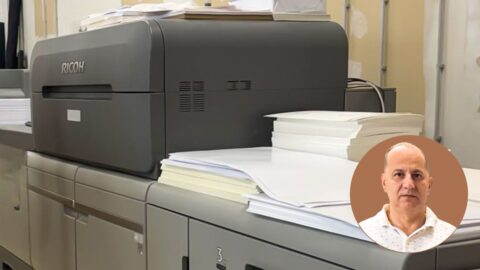
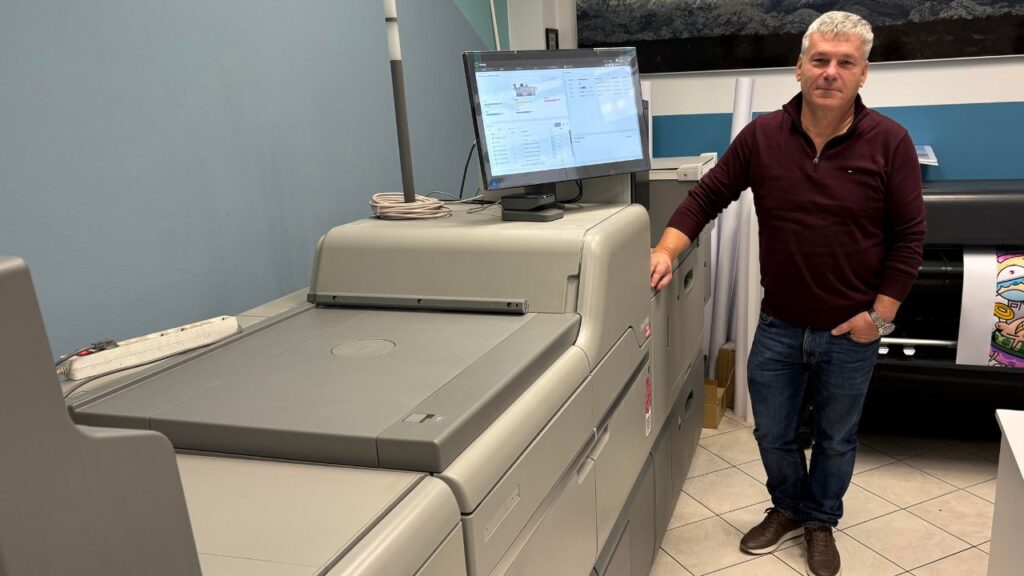
The latest step is the investment in the Ricoh Pro C7500 production printer, supplied and installed by Eurocop. This model replaced the Ricoh Pro C7200, which, according to owner Mr. Branimir Kolar, performed excellently over the past several years.
However, projects began arriving that, due to specific materials, paper textures, or the need for special effects, had to be outsourced.
“That always complicates the job. I wanted to have everything under control and do everything in-house,” says Mr. Kolar. This is precisely why he decided to upgrade to the Ricoh Pro C7500, which offers a wider range of capabilities and more reliable organization.
Another reason for the investment is the lack of qualified labor.
“There are no experts on the market, and when there aren’t enough people, technology has to take on part of the burden. The technology we invest in is top-tier, intuitive, and easy to manage. By investing in new machines, we also relieve our employees—so one person can operate two or three machines, which means a lot in today’s conditions,” Mr. Kolar explains.
Where Does the Ricoh Pro C7500 Make a Difference?
The Ricoh Pro C7500 provides a significantly broader range of possibilities. The configuration chosen includes white, gold, silver, and clear varnish, opening space for creative effects and premium products that are increasingly in demand. Team adaptation to the new machine is ongoing, and, as Mr. Kolar notes, Eurocop’s excellent training and support significantly accelerate the process.
The Ricoh Pro C7500 delivers around 15% higher productivity, supports paper weights up to 470 g/m², provides more stable output on textured materials, and handles longer formats up to 960 mm. The new model also offers a lower cost per print thanks to more efficient toner usage.
“If the machine doesn’t follow the design and the material, the entire design concept simply fails. With this model, we can realize all requirements—both visual and technical,” explains Mr. Kolar.
Better white coverage, finer tonal gradations, and more stable quality will be especially beneficial in segments where Ars Kopija is increasingly active: premium invitations, small art editions, brochures, books, diplomas, and museum publications.
Every new machine, he says, opens a new business segment, and he expects the C7500 to bring another significant leap forward.
“Customers today want products quickly and at top quality. Now we can meet even the most demanding requirements. I would say we are one step away from offset,” Mr. Kolar concludes.