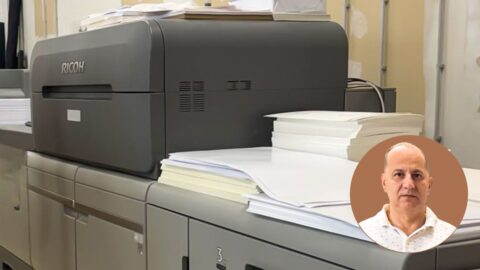

We spoke with Mr. Borjan Divljanovic, owner of the Pixel graphic studio in Bijeljina (BiH), regarding their latest investment: the Ricoh Pro™ C7500.
Why did you decide to specialize in the SRA3 format and dry toner?
I happened to run some statistics that showed 10% to 20% of print shops work exclusively in that format, so I saw an opportunity there. I also analyzed research by Smithers, which favors the SRA3 format over larger formats. The majority of graphic products can be produced from this size. The research also cites print run figures, and I must admit they align with our experience in the BiH market.
Why dry toner? I analyzed that as well. Currently, it is a mature technology, and the quality has drawn significantly closer to offset. I ruled out inkjet because we don’t have the print run volumes for inkjet in BiH. Furthermore, the availability of inkjet media on the BiH market seems lower compared to dry toner. The range of printers available on the market also favors dry toner, and the situation is identical regarding price. Investing in an inkjet printer that meets high graphic standards in both speed and quality is quite a high hurdle. Those are the reasons we moved forward with dry toner, and we see great developmental potential in that segment.
How did you reach the decision to purchase the Ricoh Pro C7500?
When we started the printing house, we began with a manufacturer whose technology we still partially have in operation. A few months ago, we made a pivot and installed the Ricoh Pro C7500.
The decision was primarily driven by special colors. I have known the company Eurocop for nearly ten years, and when investing in new technology, I took Ricoh’s printer models into account. My first communication was with Eurocop in Zagreb, after which we handled everything else with their partner in BiH. Switching to the Ricoh Pro C7500 is quite a significant leap compared to the machines we had before. The Ricoh requires a more serious operator, someone willing to put in the effort. For example, the feeder module on the Ricoh is fantastic. Another highlight is the extensive adjustability of the machine. With Ricoh, you set the configurations and handle all similar jobs with those settings. We weren’t used to that workflow; previously, we had to unify every job manually to extract the best quality.
Ricoh brought the fifth color to our print shop. This is a market breakthrough that allows us to elevate our clients’ products to a higher level.
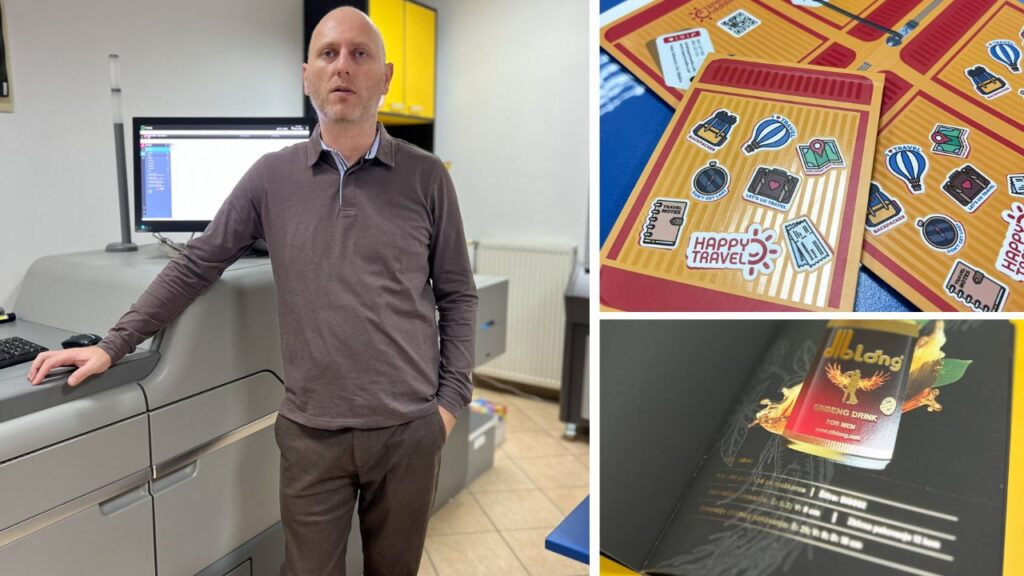
We produce complex items. Most of our products are multi-layered, a CMYK base, followed by lamination, varnish, metallic foil, or both. We strive to create products that people want to keep in their hands, to turn over and touch. Often, we aren’t able to bill for the full amount of labor invested in a specific product, but the satisfaction we feel in the shop when a product is finished and the client’s reaction when they see the final result is immeasurable.